New staff

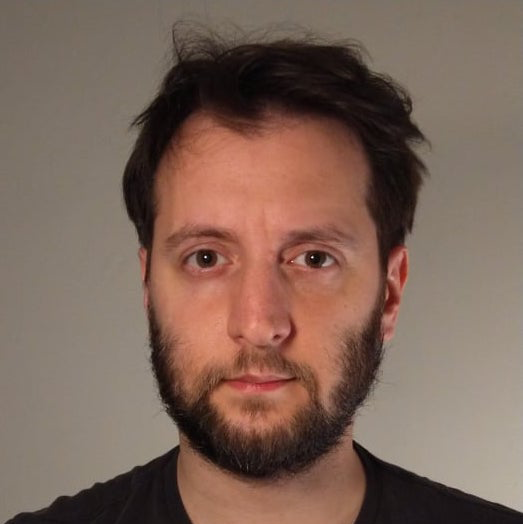
Edoardo VITAGLIANO

Edoardo VITAGLIANO

Researcher
My research is on theoretical astroparticle physics, whose ambitious goal is discovering the fundamental laws of Nature blending particle physics, cosmology, astrophysics, and condensed matter physics. One of the most exciting prospects is the potential discovery of dark matter in the form of feebly interacting particles, such as sterile neutrinos, axions, millicharged particles, and dark photons. These particles are often theoretically well motivated, and have the aesthetic draw of solving open problems in cosmology and particle physics simultaneously. I have proposed new ideas to search for axions and other light mass particles with both indirect and direct signals, through the use of multi-messenger astronomy and new detectors. Other topics of research include primordial black holes, astrophysical transients, neutrino astronomy, and gravitational waves.
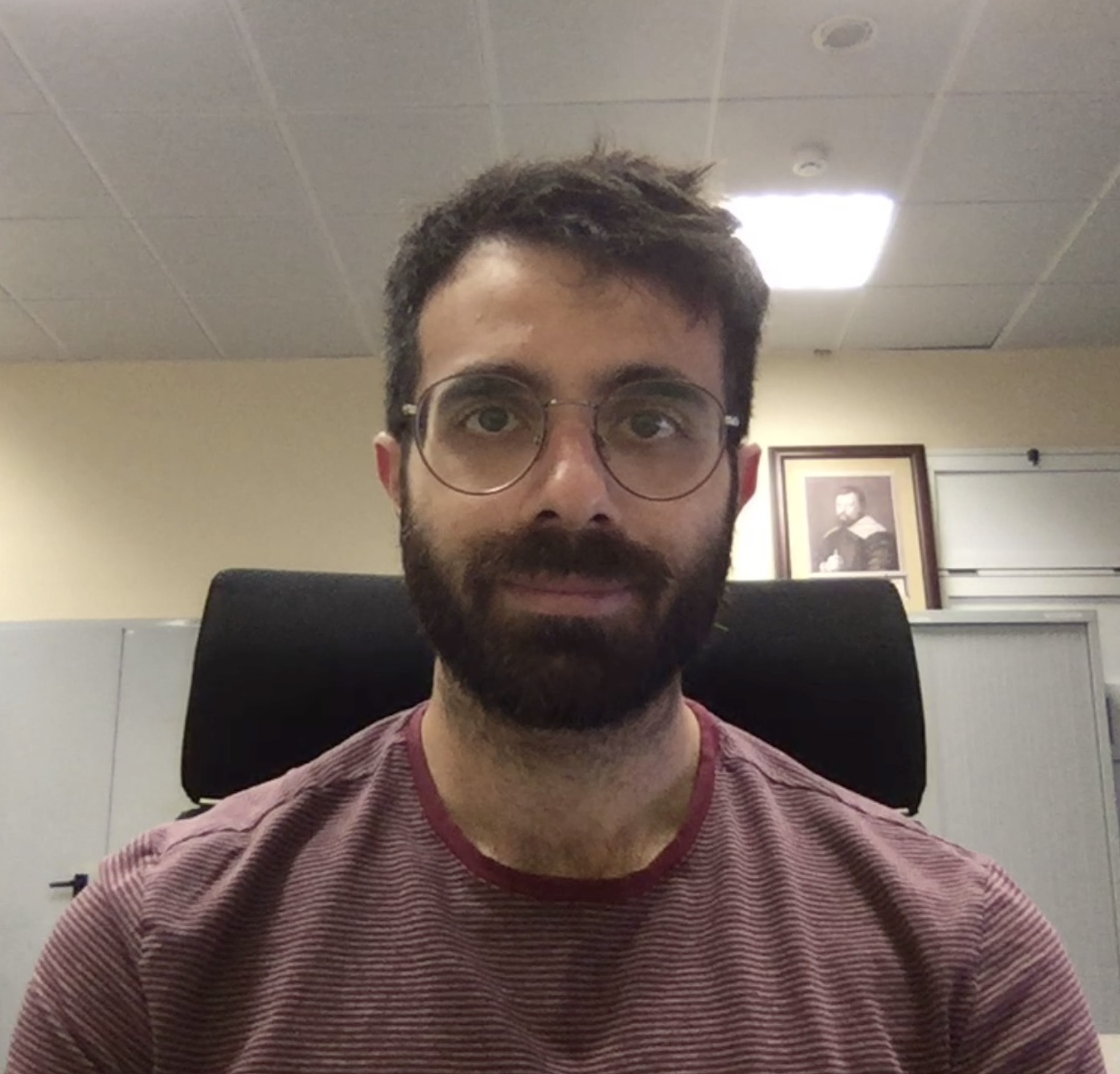
Tiziano ZINGALES

Tiziano ZINGALES

Researcher
My research field is about the study of exoplanets and their atmospheres. The large amount of data from space telescopes like CHEOPS, TESS and Kepler and worldwide ground-based surveys helped shed light on our planetary formation theories and give us a huge variety of different worlds to see. However, the full characterisation of exoplanets is possible through a systematic study of their atmospheres. The Hubble Space Telescope and the James Webb Space Telescopes showed us the great potentiality of spectroscopy for studying exoplanetary atmospheres. My research consists of the development of efficient analysis tools which allow an optimal interpretation of the available spectroscopic data to serve future space missions dedicated to this task like the Ariel space mission. Artificial intelligence and quantum computing algorithms applications are two sides of my work as they look promising to push the study of exoplanets beyond their current limits.
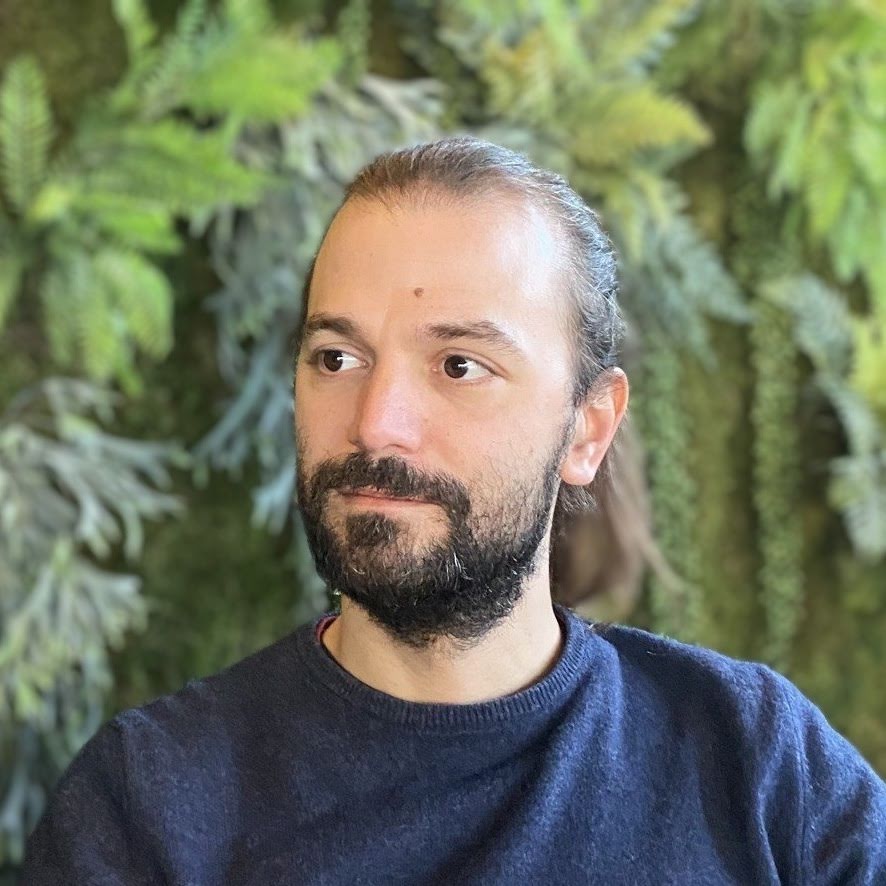
Boris KALINIC

Boris KALINIC

Researcher
My research is situated within the field of experimental nanophotonics and is directed toward the control and manipulation of quantum emitters through the design of plasmonic and dielectric nanostructures, as well as phase-change materials. Light–matter interactions at the nanometric scale enable the precise modulation of radiative processes and the exploration of novel architectures for quantum light generation. In particular, my work focuses on the development of high-Q-factor metasurfaces and on the implementation of advanced optical spectroscopy techniques to investigate the behavior of functional materials on ultrafast temporal scales. A central component of my research concerns the use of materials exhibiting ultrafast phase transitions to achieve active control over optical properties, thereby opening avenues for the realization of reconfigurable photonic and quantum devices. Additional research lines include the study of nonlinear optical phenomena and nanostructured metal oxides for photoelectrocatalytic applications. My activities are conducted within collaborations with various international institutions, among which the most prominent at present are Imperial College London and Sorbonne University.
Pietro SILVI

Pietro SILVI

Researcher
My research focuses on numerical and quantum simulation of many-body quantum systems. Numerical simulations in my studies are inspired by quantum information concepts and methods, such as Tensor Network ansatz states, where information on the many-body wavefunction is efficiently compressed, while exploiting quantum entanglement as a resource. Quantum simulations in my research interests are based on atoms and light, exploiting either neutral atoms suspended in optical lattices and optical tweezers, as well as ions trapped within oscillating magnetic fields. As a theoretical physicist, my task is to efficiently encode interacting models, including lattice gauge theories in Hamiltonian formulation, on the native resouces of existing atomic quantum simulation platforms
Federico BRIVIO

Federico BRIVIO

Researcher
My research focuses on the study of material properties using various ab initio techniques (i.e., without relying on experimental data). These methods provide accurate descriptions of phenomena that are often difficult to probe experimentally or model rigorously. More recently, the development of machine-learning approaches based on large-scale data analysis has expanded the scope of my work, enabling simulations that cover broader spatial and temporal domains. In terms of applications, these techniques are highly flexible and can be integrated into multiscale simulation pipelines. They are relevant to a wide range of technological areas, from optoelectronics to catalysis.
Gabriele FRANCIOLINI

Gabriele FRANCIOLINI

Researcher
My research is situated in the context of theoretical cosmology and gravitational wave physics, with the aim of using these signals as new probes of the primordial universe and of physics beyond the Standard Model. In particular, I study the role of primordial black holes as a possible component of dark matter and as indicators of the physical conditions present in the very first moments after the Big Bang. A central aspect of my work concerns the characterization of gravitational wave signals produced by early-universe processes — such as collapses, instabilities, or phase transitions — and their connection with current and future observations, from third-generation ground-based detectors, such as the Einstein Telescope, to space-based interferometers like LISA. At the same time, I develop theoretical methods and phenomenological tools to interpret observations of black hole mergers and to distinguish between astrophysical and primordial origins based on their properties. Further research lines include the study of primordial perturbations generated during inflation, the formation of small-scale structures, and the potential complementarity between cosmology, astrophysics, and gravitational waves in uncovering new physics.
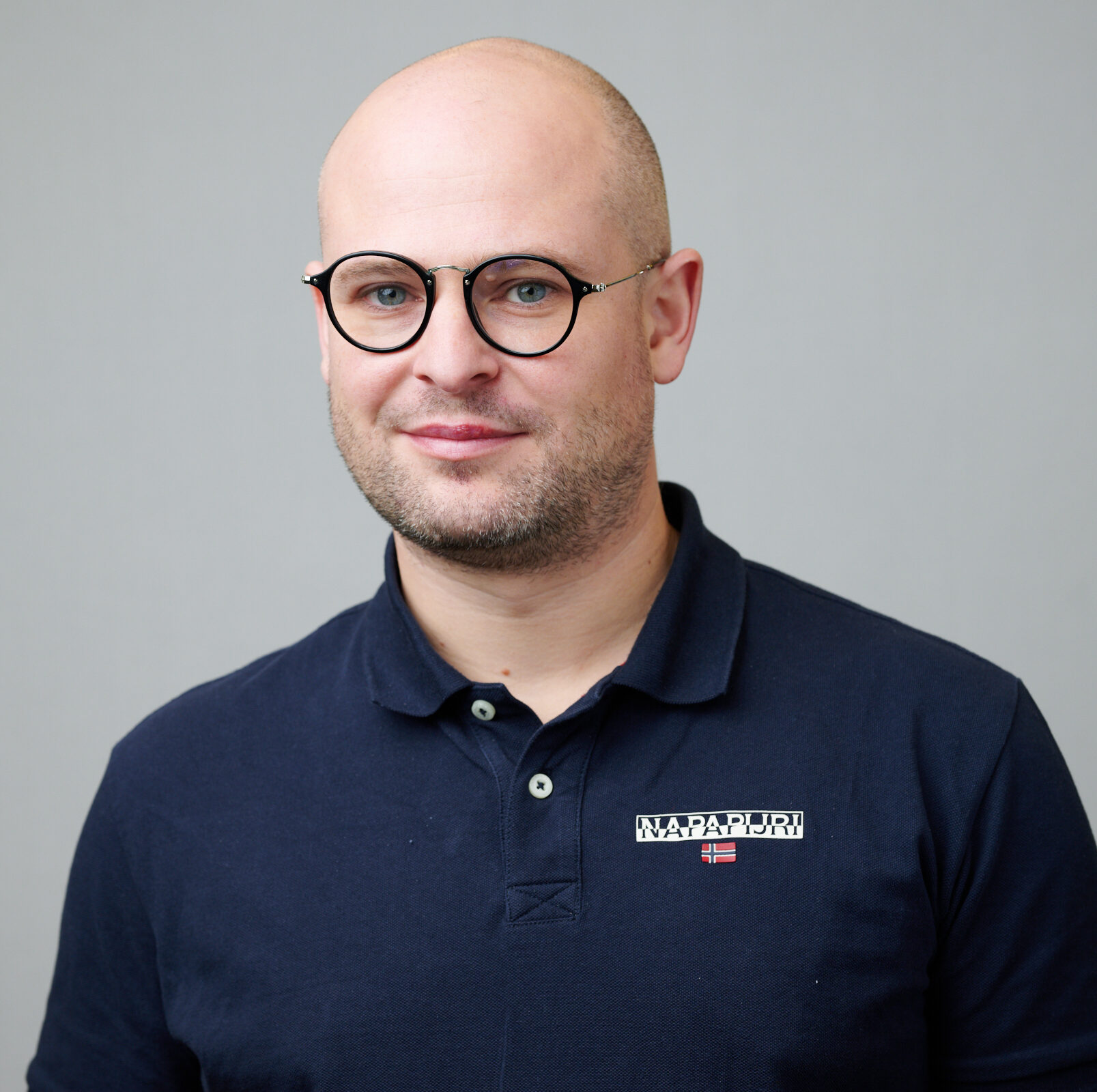
Stefano BERTOLDO

Stefano BERTOLDO

Technical and administrative staff
Laboratory technician for Quantum Technologies (LaTeQ) in Matter Physics